What Should Be Included in a Professional Office Cleaning Plan?
A clean and well-maintained office does more than simply create a good first impression. It helps provide a more pleasant environment for employees, visitors and clients while ensuring that important areas of the workplace receive regular attention.
However, professional office cleaning is not a one-size-fits-all service. A small office with a handful of employees will have very different cleaning requirements from a busy workplace with meeting rooms, communal kitchens, high foot traffic and dozens of staff members.
So, what should actually be included in a professional office cleaning plan?
A well-planned service should cover the areas that matter most, establish how often different tasks need to be completed and adapt to the specific needs of the business. From everyday cleaning to periodic deep cleaning, here is what to look for in a professional office cleaning plan.
1. A Cleaning Plan Tailored to Your Office
The first step in creating an effective office cleaning plan is understanding the workplace itself.
Every office is different. The size of the premises, number of employees, daily footfall, type of flooring and available facilities can all affect how often cleaning is required.
For example, a busy office with a large team may require daily cleaning of washrooms, kitchens and communal areas. A smaller office may only need professional cleaning a few times each week.
A tailored office cleaning plan should consider:
- The size and layout of the office
- The number of employees and visitors
- Daily foot traffic
- The number of washrooms and kitchen areas
- Types of flooring and furnishings
- Areas that receive the most use
- Business opening hours
- Any specialist cleaning requirements
Rather than paying for unnecessary services, businesses should have a cleaning schedule designed around how their workplace actually operates.
2. Reception and Entrance Cleaning
The entrance to an office is often the first area that employees, clients and visitors see. For this reason, reception areas should be included in any professional office cleaning plan.
Depending on the premises, regular cleaning may include:
- Vacuuming or sweeping entrance floors
- Cleaning entrance mats
- Wiping reception desks
- Cleaning glass doors and partitions
- Removing fingerprints and marks from visible surfaces
- Emptying bins and removing waste
- Tidying waiting areas
Busy entrances can quickly collect dirt and debris, particularly during wet weather. Regular attention helps keep these areas presentable throughout the working week.
3. Desk and Workspace Cleaning
Office desks and workstations are used throughout the day and can quickly become dusty or cluttered.
A professional cleaning plan should clearly establish what areas can be cleaned and how personal workspaces should be handled. In many offices, cleaners will wipe accessible surfaces without moving important documents or personal belongings.
Cleaning may include:
- Dusting accessible desk surfaces
- Emptying desk-side bins
- Cleaning shared workstations
- Removing dust from shelves and office furniture
- Vacuuming or cleaning around desks
- Wiping shared equipment where appropriate
Clear instructions are particularly important in offices where employees work with confidential documents or specialist equipment.
4. Cleaning High-Touch Areas
Certain surfaces are touched repeatedly throughout the working day and should receive regular attention as part of an office cleaning routine.
These areas can include:
- Door handles
- Light switches
- Handrails
- Lift buttons
- Shared desks
- Meeting room tables
- Kitchen appliance handles
- Shared office equipment
The exact cleaning approach will depend on the workplace and the products being used. Including high-touch areas within the regular cleaning schedule helps ensure that frequently used surfaces are not overlooked.
5. Washroom Cleaning and Consumables
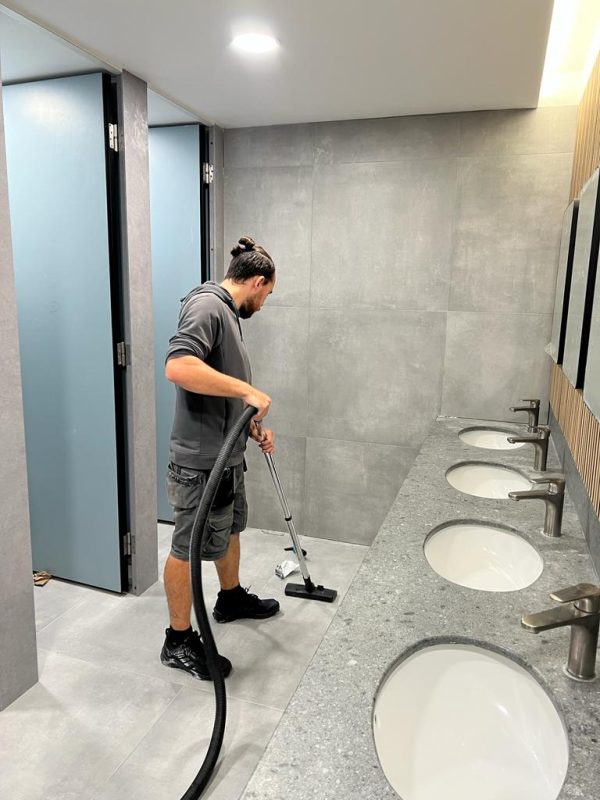
Office washrooms require consistent cleaning and maintenance, particularly in busy workplaces.
A professional office cleaning plan should outline how often washrooms will be checked and cleaned. Typical tasks may include:
- Cleaning toilets and urinals
- Cleaning sinks and taps
- Wiping counters
- Cleaning mirrors
- Cleaning and disinfecting relevant surfaces
- Emptying washroom bins
- Cleaning floors
- Checking soap dispensers
- Replenishing toilet paper
- Restocking paper towels or other agreed consumables
For businesses, running out of essential washroom supplies can be inconvenient for employees and visitors. Some professional office cleaning companies can also supply consumables as part of an agreed service.
6. Kitchen and Break Room Cleaning
Office kitchens and staff break rooms can become messy quickly, especially in workplaces with a large number of employees.
A professional cleaning plan should identify the areas that require regular attention, which may include:
- Cleaning worktops
- Wiping tables
- Cleaning sinks
- Cleaning the exterior of appliances
- Removing visible spills and food debris
- Emptying bins
- Sweeping and mopping floors
- Cleaning frequently used surfaces
Depending on the agreement, deeper cleaning of appliances such as refrigerators and microwaves may also be included periodically.
A clearly defined cleaning schedule is useful because kitchens often need more frequent attention than meeting rooms or other lower-traffic areas.
7. Meeting Room Cleaning
Meeting rooms are important spaces for both internal discussions and client meetings. They should be kept clean and presentable, particularly if they are regularly used by visitors.
Office cleaning may include:
- Wiping meeting tables
- Cleaning chair arms where required
- Emptying bins
- Vacuuming or cleaning floors
- Cleaning glass partitions
- Removing visible marks from surfaces
- Tidying chairs and the overall room
The frequency of meeting room cleaning will depend on how often the space is used. In a busy office, regular cleaning may be necessary to keep the room ready for the next meeting.
8. Floor Cleaning and Maintenance
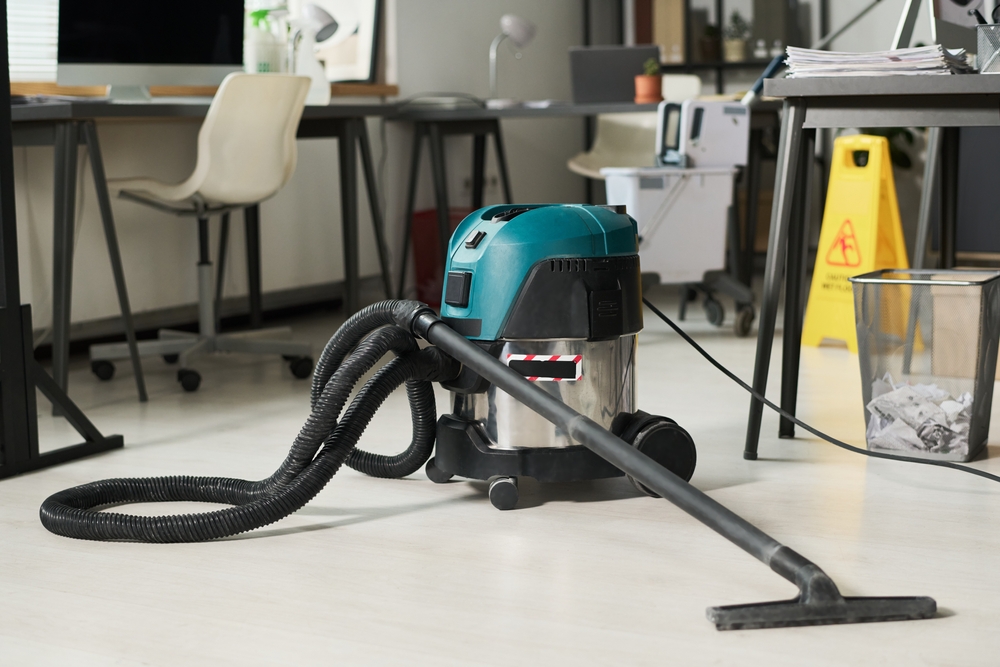
Office flooring experiences daily wear from employees, visitors and equipment. A professional office cleaning plan should include a suitable approach based on the type of flooring throughout the building.
This may involve:
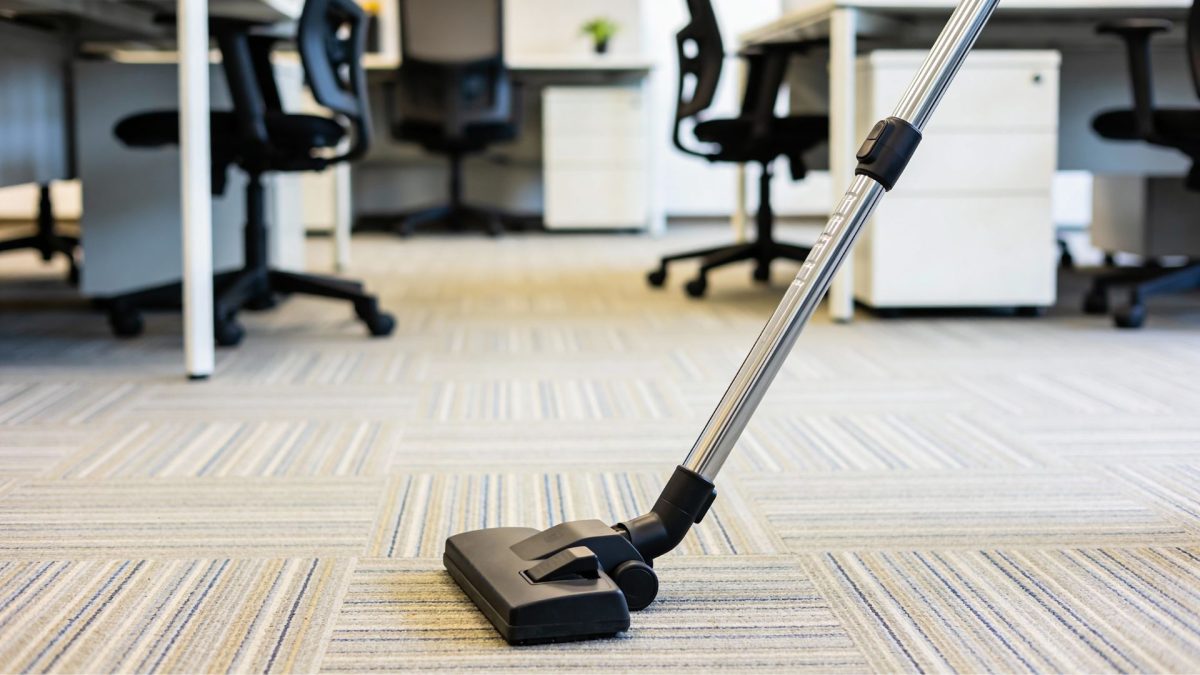
- Vacuuming carpeted areas
- Cleaning entrance mats
- Sweeping hard floors
- Mopping suitable floor surfaces
- Spot-cleaning spills
- Paying particular attention to high-traffic areas
However, routine floor cleaning is only one part of long-term maintenance.
Over time, carpets can collect dirt and stains that regular vacuuming cannot fully remove. Hard flooring may also require more detailed cleaning depending on the material and level of use.
For this reason, many businesses benefit from scheduling periodic professional carpet cleaning or specialist floor cleaning alongside their regular office cleaning service.
9. Waste and Recycling Management
Waste can quickly affect the appearance and cleanliness of an office if bins are not emptied regularly.
A professional office cleaning plan should clearly state:
- Which bins will be emptied
- How often waste will be removed
- Whether recycling is separated
- Who is responsible for replacing bin liners
- Where waste should be placed for collection
Desk-side bins, kitchen bins and communal waste areas may all have different requirements.
Including waste management within the cleaning schedule helps ensure that routine tasks are completed consistently.
10. Dusting Throughout the Office
Dust can build up in areas that are easy to overlook, particularly around office furniture, shelves, skirting boards and less frequently used spaces.
Regular dusting may include:
- Desks and work surfaces
- Shelving
- Window ledges
- Office furniture
- Skirting boards
- Accessible fixtures
Less accessible areas may require periodic cleaning rather than being included during every visit.
A good cleaning plan should identify both the areas that need regular attention and those that should be scheduled for deeper cleaning at longer intervals.
11. Interior Glass and Windows
Glass doors and internal partitions can quickly develop fingerprints, marks and smudges.
Depending on the office layout, a professional cleaning plan may include:
- Interior glass doors
- Glass partitions
- Meeting room glass
- Reception glass
- Interior windows
Cleaning glass regularly can make a noticeable difference to the overall appearance of an office, particularly in modern workplaces with large glass partitions.
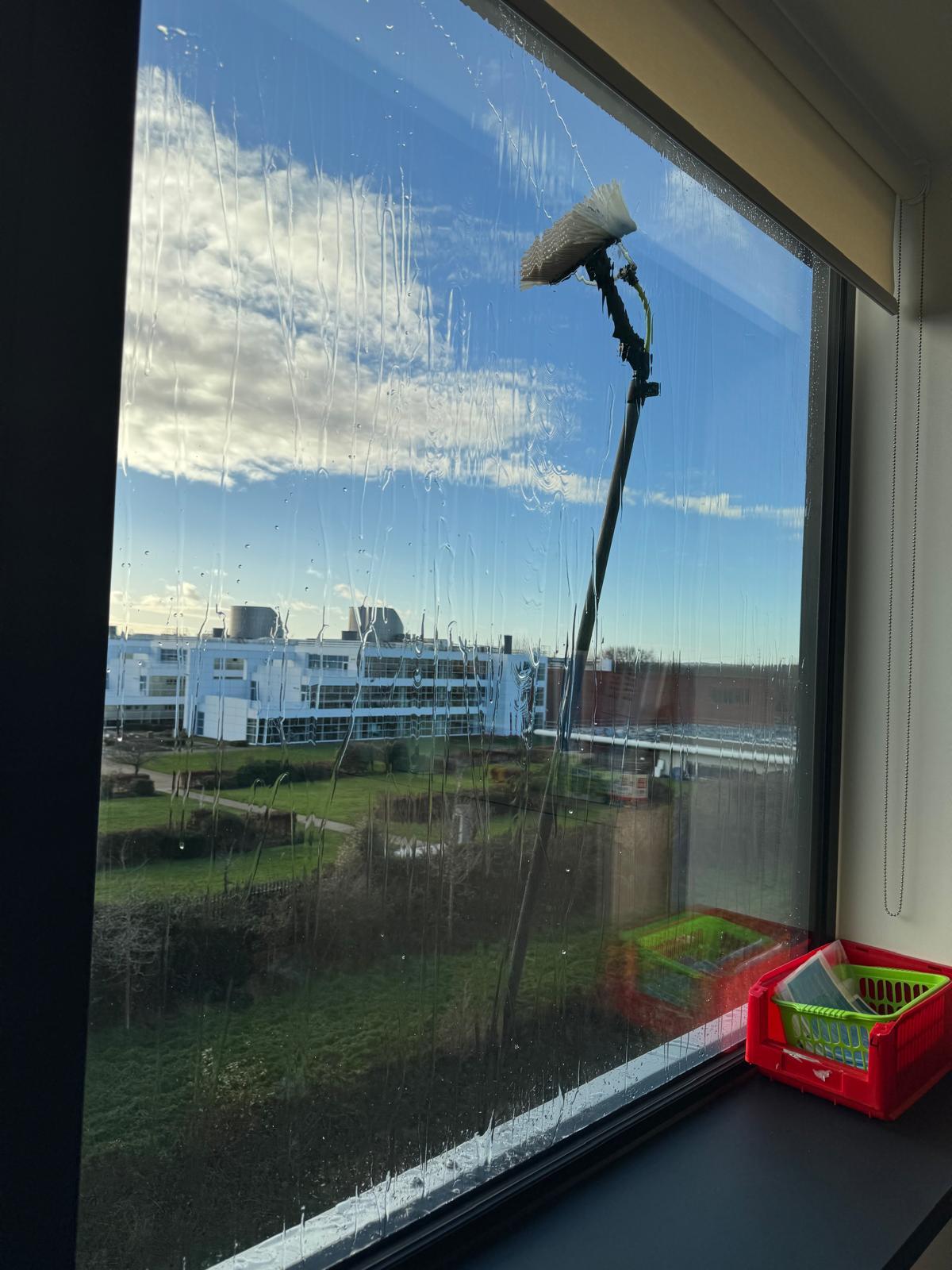
External window cleaning may be arranged separately depending on the requirements of the building.
12. Deep Carpet and Upholstery Cleaning
Regular office cleaning helps maintain carpets and furniture, but certain items may occasionally require a more intensive clean.
Professional deep cleaning services may include:
- Deep carpet cleaning
- Stain treatment
- Upholstery cleaning
- Office chair cleaning
- Furniture cleaning
The frequency will depend on the level of use, the type of material and the condition of the furnishings.
Including periodic deep cleaning within a wider office cleaning plan can help businesses address areas that do not necessarily need intensive attention every day or week.
13. Daily, Weekly and Periodic Cleaning Tasks
One of the most important elements of a professional office cleaning plan is deciding how frequently each task should be completed.
Not every area needs the same level of attention.
Tasks Often Included During Regular Cleaning Visits
Depending on the office and cleaning schedule, regular tasks may include:
- Emptying bins
- Cleaning washrooms
- Cleaning kitchen areas
- Wiping frequently used surfaces
- Vacuuming or sweeping floors
- Cleaning high-touch areas
- Spot-cleaning visible marks
Weekly Cleaning Tasks
Weekly tasks may include:
- More detailed dusting
- Cleaning interior glass
- Mopping hard floors thoroughly
- Cleaning office furniture
- Vacuuming upholstery where required
- Cleaning kitchen appliances externally
Periodic Deep Cleaning
Some tasks may only be required monthly, quarterly or as needed. These can include:
- Deep carpet cleaning
- Upholstery cleaning
- Detailed furniture cleaning
- Cleaning less accessible areas
- Detailed cleaning behind appliances
- Deep cleaning specific areas of the office
Organising tasks by frequency helps ensure that cleaning resources are focused where they are needed most. A structured schedule can also reduce the risk of important areas being missed.
14. Flexible Cleaning Times
For many businesses, cleaning during office hours is not always practical.
Professional office cleaning plans should consider the daily operations of the business and arrange cleaning times that minimise disruption.
Depending on the provider and business requirements, cleaning may be carried out:
- Early in the morning
- After office hours
- Overnight
- At quieter times during the day
Flexible scheduling can be particularly useful for busy offices, meeting spaces and workplaces that receive regular visitors.
The best cleaning schedule is one that allows the work to be completed effectively while causing as little disruption to employees and business operations as possible.
15. Quality Checks and Supervision
Consistency is essential when it comes to professional office cleaning.
A cleaning plan should not simply list the tasks that need to be completed. It should also establish how quality will be monitored.
This may involve:
- Regular site inspections
- Cleaning checklists
- Supervisor visits
- Communication with the client
- Reporting any issues or maintenance concerns
- Reviewing the cleaning plan when business needs change
Quality checks help ensure that the agreed standard is maintained over time rather than allowing cleaning standards to gradually decline.
16. The Importance of Clear Communication
A successful office cleaning service should be built around clear communication.
Businesses should be able to explain their requirements, raise concerns and request changes when necessary.
For example, a cleaning plan may need to be adjusted if:
- The number of employees increases
- The business moves to a larger office
- New meeting rooms or facilities are added
- The office begins receiving more visitors
- Certain areas require more frequent cleaning
- The business requires additional specialist cleaning
A flexible and responsive approach allows the cleaning service to evolve alongside the business.
How to Choose the Right Office Cleaning Plan
Before choosing a professional office cleaning service, it is worth considering the specific needs of your workplace.
Ask yourself:
- Which areas of the office receive the most use?
- How many employees and visitors use the premises?
- Do washrooms and kitchens require daily cleaning?
- What type of flooring does the office have?
- Are carpet or upholstery cleaning services required?
- Do you need cleaning outside normal office hours?
- Are consumables required as part of the service?
- How will cleaning quality be monitored?
The answers can help create a more practical and effective cleaning plan.
The goal should not simply be to choose the most frequent or cheapest service. Instead, businesses should look for a cleaning plan that provides the right level of support for their premises.
A Professional Cleaning Plan Should Work Around Your Business
A good office cleaning plan is more than a simple list of cleaning tasks.
It should be tailored to the size, layout and daily demands of the workplace. It should identify which areas need regular cleaning, which tasks require weekly attention and when specialist deep cleaning services may be beneficial.
From washrooms and communal kitchens to carpets, furniture and high-touch areas, every workplace has different priorities.
By working with a professional cleaning company and creating a clear, flexible cleaning plan, businesses can maintain a cleaner and more presentable office environment while ensuring that important tasks are completed consistently.
Looking for Professional Office Cleaning in Southampton?
At Clear Vision, we provide tailored commercial office cleaning services for businesses across Southampton and the surrounding areas. Our experienced team can create a cleaning plan around your workplace, whether you require regular office cleaning, deep furniture cleaning, carpet cleaning or additional cleaning support.
We understand that every business operates differently, which is why we offer flexible cleaning arrangements, including early morning and out-of-hours cleaning where required.
If you are looking for a reliable office cleaning solution that works around your business, contact Clear Vision today to discuss your commercial cleaning requirements and arrange a tailored cleaning plan.